


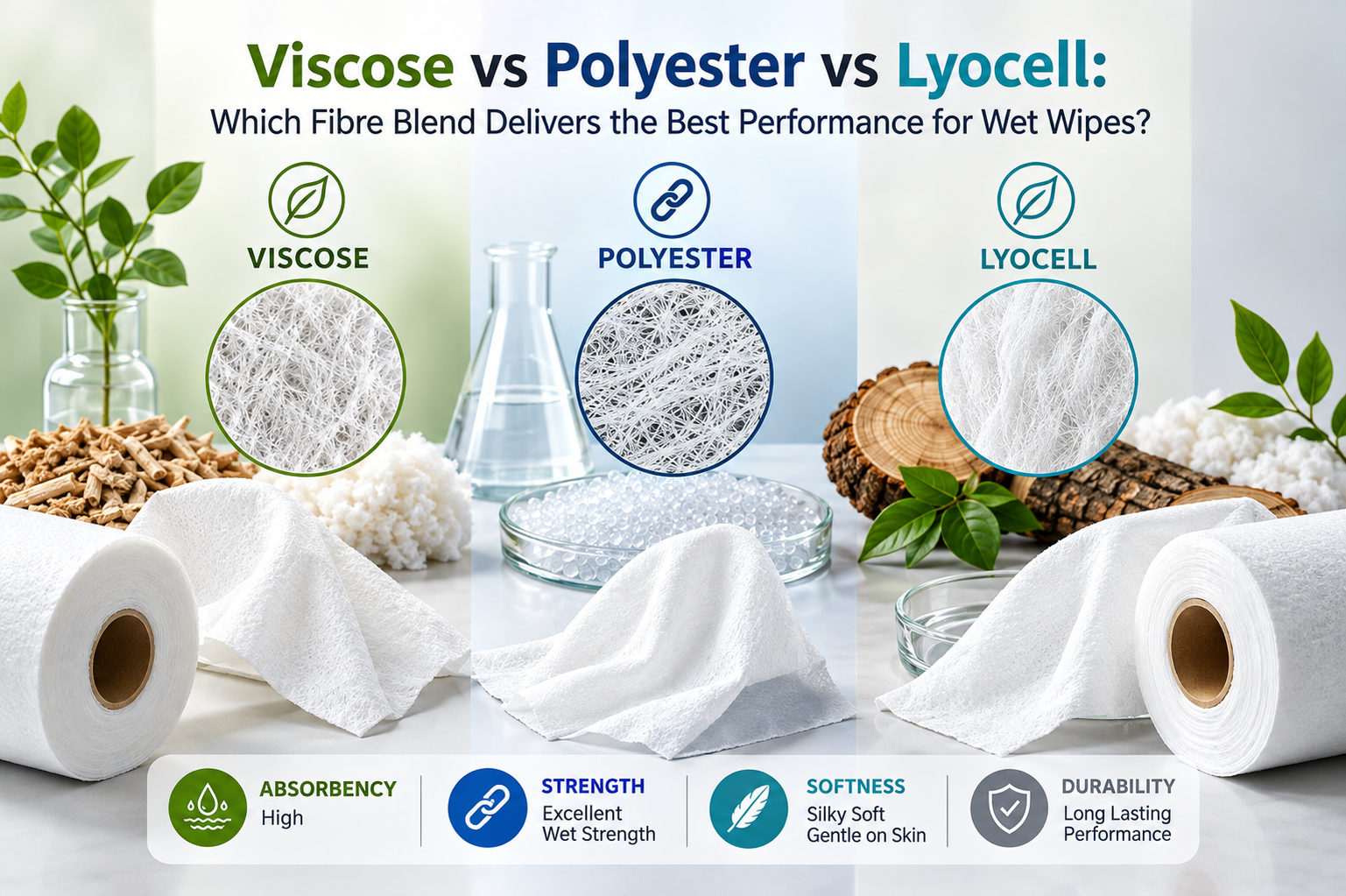
Viscose vs Polyester vs Lyocell: Which Fibre Blend Delivers the Best Performance for Wet Wipes?
Choosing between viscose, polyester, and Lyocell isn't really about picking a "best" fibre. It's about matching fibre behaviour to what your wipe actually needs to do, since a baby wipe and a disinfectant wipe fail in completely different ways if the fibre blend is wrong. Here's how the three compare across the factors that actually affect product performance.
-
Recent Post
-
How to Choose the Right Spunlace Nonwoven Fabric Manufacturer for Your Business
Sourcing decisions in the nonwoven category rarely fail because of price. They fail because a buyer
15.09.2026
Read Article -
How Global Wet Wipe Brands Evaluate Nonwoven Fabric Suppliers Before Signing a Contract
Multinational wet wipe brands don't sign with a nonwoven fabric supplier off a single sample and a g
08.09.2026
Read Article -
100 Percent Plastic Free Nonwovens: What Global Buyers Need to Know in 2026
Learn how plastic-free nonwoven materials are helping brands meet evolving EU and US sustainability
14.08.2026
Read Article -
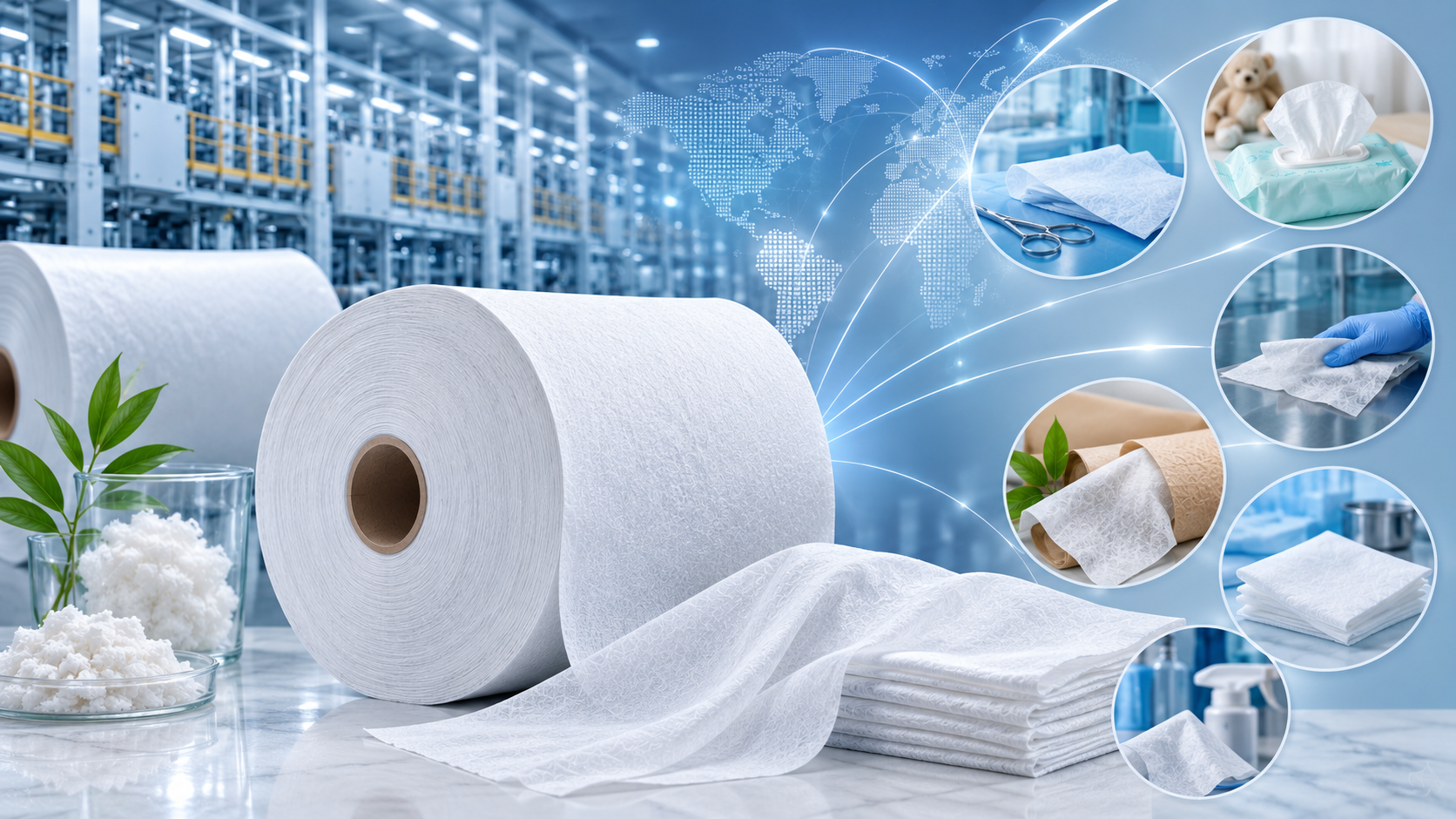
Why Multi-Application Nonwoven Manufacturing Matters to Global Buyers
Discover why global buyers are choosing multi-application nonwoven manufacturers to simplify procure
07.08.2026
Read Article -
What European Buyers Often Get Wrong About Sourcing Nonwovens from India
Sourcing nonwovens from India is no longer driven by cost alone. This blog explains why European buy
29.07.2026
Read Article -
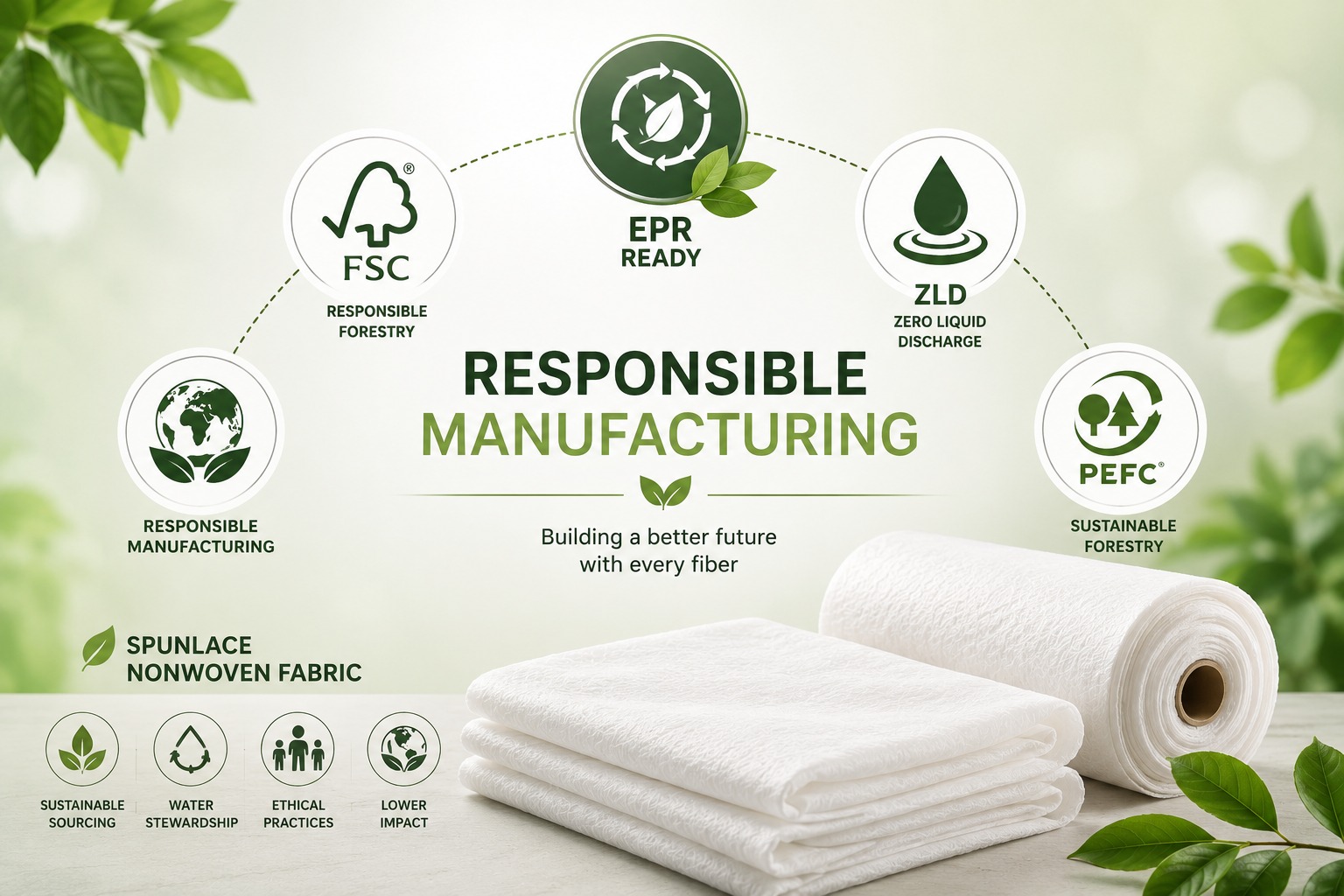
Beyond the Material: What Global Buyers Should Know About Responsible Nonwoven Manufacturing
Responsible nonwoven manufacturing enables global buyers to meet ESG goals through ZLD, FSC and PEFC
22.07.2026
Read Article - View All Blogs
-
Need nonwoven solutions for your application?
Talk to our team about custom fabrics, sustainability, and product development tailored to your industry.
Frequently Asked Questions
Know everything — be it our products, our process, or why nonwovens are so cool.
Which fibre is most absorbent?
Both viscose and lyocell are made from cellulose, making them far more absorbent than polyester, which naturally absorbs very little moisture.
Which is most sustainable?
Lyocell generally has the strongest sustainability profile due to its closed-loop, high-solvent-recovery production process, followed by viscose. Polyester is not biodegradable.
Which fibre is best for baby wipes?
Viscose and viscose-lyocell blends are the most common options as they offer a soft feel, good absorbency, and very little synthetic material against the skin.
Which fibre is best for cosmetic wipes?
There are different kinds of viscose and lyocell , and the manufacturers use one or the other depending on what the fabric is going to be used for . Viscose is softer , lyocell is stronger when wet .
Which fibre is best for disinfectant wipes?
The most widely used are polyester and polyester/viscose blends, which give the wet strength and durability required for these applications.
Explore Recent Blogs
Viscose vs Polyester vs Lyocell: Which Fibre Blend Delivers the Best Performance for Wet Wipes?
Choosing between viscose, polyester, and Lyocell isn't really about picking a "best" fibre. It's abo
Read More
How to Choose the Right Spunlace Nonwoven Fabric Manufacturer for Your Business
Sourcing decisions in the nonwoven category rarely fail because of price. They fail because a buyer
Read More
How Global Wet Wipe Brands Evaluate Nonwoven Fabric Suppliers Before Signing a Contract
Multinational wet wipe brands don't sign with a nonwoven fabric supplier off a single sample and a g
Read More
100 Percent Plastic Free Nonwovens: What Global Buyers Need to Know in 2026
Learn how plastic-free nonwoven materials are helping brands meet evolving EU and US sustainability
Read More

Weave Your Success with Our Revolutionary Fabrics
Power your business with Elixrr's cutting-edge nonwoven fabric solutions. Eco-friendly, customizable, and engineered for excellence—because innovation starts with the right foundation.

Fibre Overview
Viscose is a regenerated cellulose fibre made from wood pulp, produced through a chemical-intensive process. It's the most widely used natural-feel fibre in wet wipe fabric because of its softness and absorbency.
Polyester is a fully synthetic, petroleum-derived fibre. It doesn't absorb liquid the way cellulose fibres do, but it adds strength and structure that cellulose alone can't provide.
Lyocell is also a regenerated cellulose fibre, but it is produced through a closed-loop process that recovers around 99% of the solvent used, a meaningfully cleaner production method than standard viscose. It's newer to the wet wipes category than viscose or polyester but growing fast in sustainable wipes material positioning.
Material Comparison
Absorbency
Viscose and lyocell, both cellulose-based, significantly outperform polyester on absorbency. Pure polyester wipes materials are, therefore, uncommon except in heavy-duty industrial or cleaning applications where durability is more important than absorbency. Polyester is synthetic, unlike plant-derived fibres, and therefore has much lower moisture absorption and retention ability.
Tensile Strength
Here's where the differences become much clearer. Viscose loses a substantial portion of its strength once wet, roughly 40 to 50%, which is a real limitation for wipes that need to hold up during use. Lyocell handles this much better, retaining around 85% of its dry strength when wet, largely due to its fibrillar structure. Polyester doesn't lose strength when wet at all, since it's not a water-absorbing fibre to begin with, which is why polyester or polyester blends are still common in disinfectant and industrial wipes.
Softness
Viscose is generally considered the softest of the three for skin-contact applications, which is why it dominates in baby wipes and facial wipes. Lyocell is also soft, with a smoother, slightly different hand feel due to its fibre structure. Polyester on its own tends to feel less premium against skin, which is why it's rarely used at high ratios in personal care wipes.
Sustainability
This is the clearest differentiator. Polyester is not biodegradable and contributes to microplastic concerns over time. Viscose is biodegradable, but its traditional production process is more chemical-intensive. Lyocell is both biodegradable and produced through a cleaner closed-loop process, which is why it's increasingly positioned as the premium sustainable nonwoven materials option for brands making plastic-free or eco claims.
Cost
Polyester is generally the least expensive of the three, followed by viscose, with lyocell typically commanding a premium due to its more sophisticated production process. That premium has narrowed as lyocell nonwoven demand has grown, but it's still a real factor in sourcing decisions at volume.
Performance by Application
● Baby wipes: Viscose or viscose-lyocell blends, prioritising softness and absorbency with minimal synthetic content
● Cosmetic and facial wipes: Viscose or lyocell, depending on whether softness or wet-strength durability matters more for the intended use
● Disinfectant and industrial wipes: Polyester or polyester-viscose blends, prioritising wet strength and durability for repeated wiping motions
● General household wipes: Polyester-Viscose blends remain the most common middle ground, balancing cost, strength, and absorbency.
Recommended Fibre Blends
Very few commercial wipes use a single fibre at 100%. Elixrr's own fibre blends, for example, span pulp-viscose and pulp-polyester combinations alongside 100% lyocell options, reflecting how the category actually works: a pulp-viscose base for absorbency and cost balance, a polyester addition where wet strength is the priority, and lyocell where a brand needs both performance and a genuine sustainability claim.
Choosing the Right Material Based on End Use
Start with what the wipe needs to survive, not just what it needs to feel like on shelf. A wipe that only needs to clean once and get discarded has different requirements than one marketed on durability or premium feel. Match the fibre blend to the functional requirement first, then optimise for cost and sustainability positioning within that constraint.
Evaluating fibre blends for your next wipes program?
Explore Elixrr's spunlace fabric range for wet wipes manufacturing, or contact our experts to discuss blend selection.
Further reading: FSC (Forest Stewardship Council)